Blockchain royalties for generative artists
A five-person consulting proposal for a platform where generative artists register works and collect royalties themselves.
- TRON
- BTFS
- Smart contracts
- Crypto payment gateway
- Custodial wallets
- 5people in the consulting team; my role was marketing strategy
- 14slides in the final proposal, version 7 of the deck
Royalties that flow straight back to the artist
Tap a block to see what it does.
- People
- Logic
- Data
- Infrastructure
The heart of the system
Royalty contract
Smart contract that records ownership on an immutable registry and pays each rights holder as soon as a payment arrives.
Connected to TRON network, BTFS storage, Payment gateway, Non-custodial path
People
Artist
Creators of generative and AI art upload works and set how royalties are split.
Hands to Custodial web2 app, Non-custodial path
Logic
Custodial web2 app
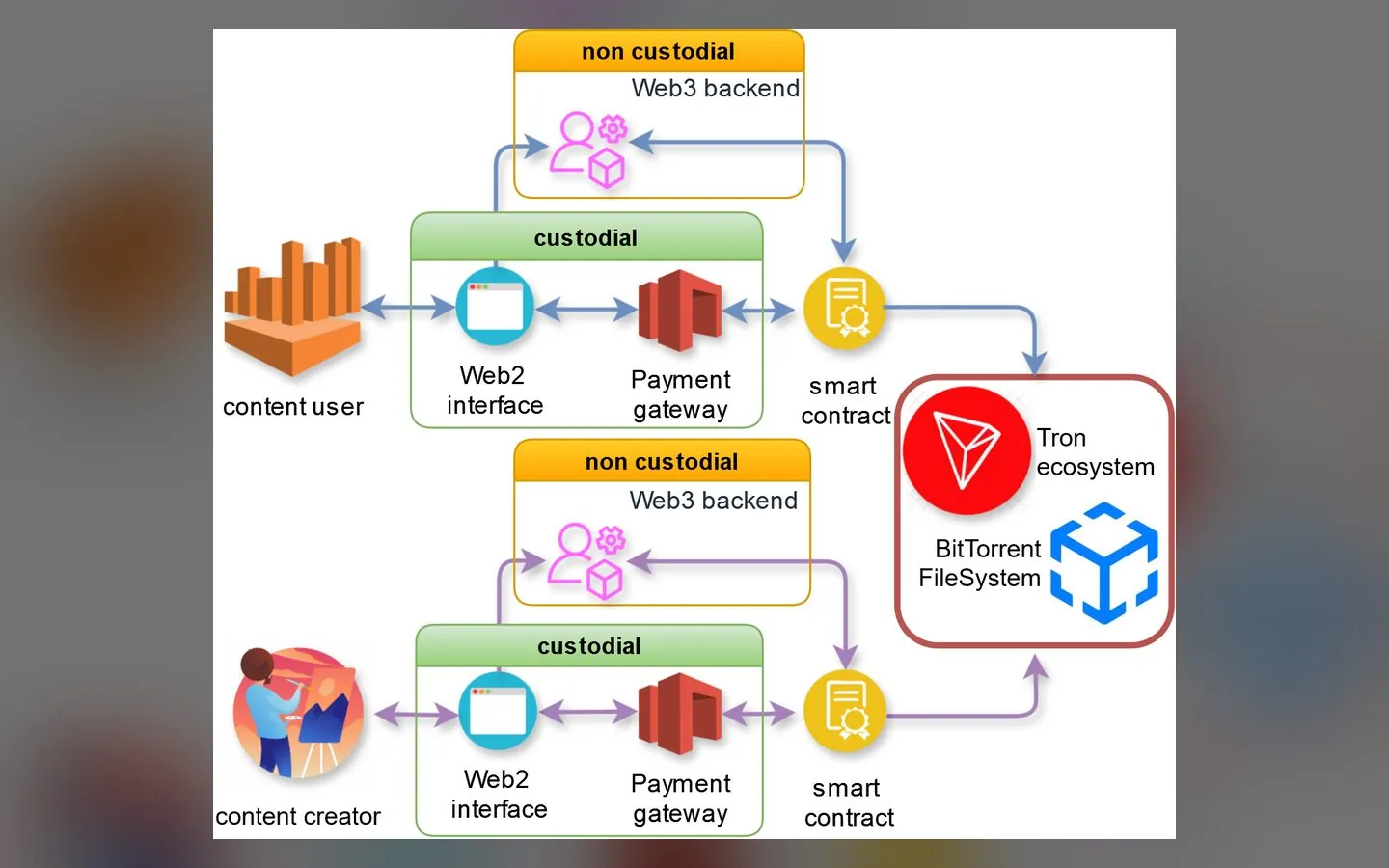
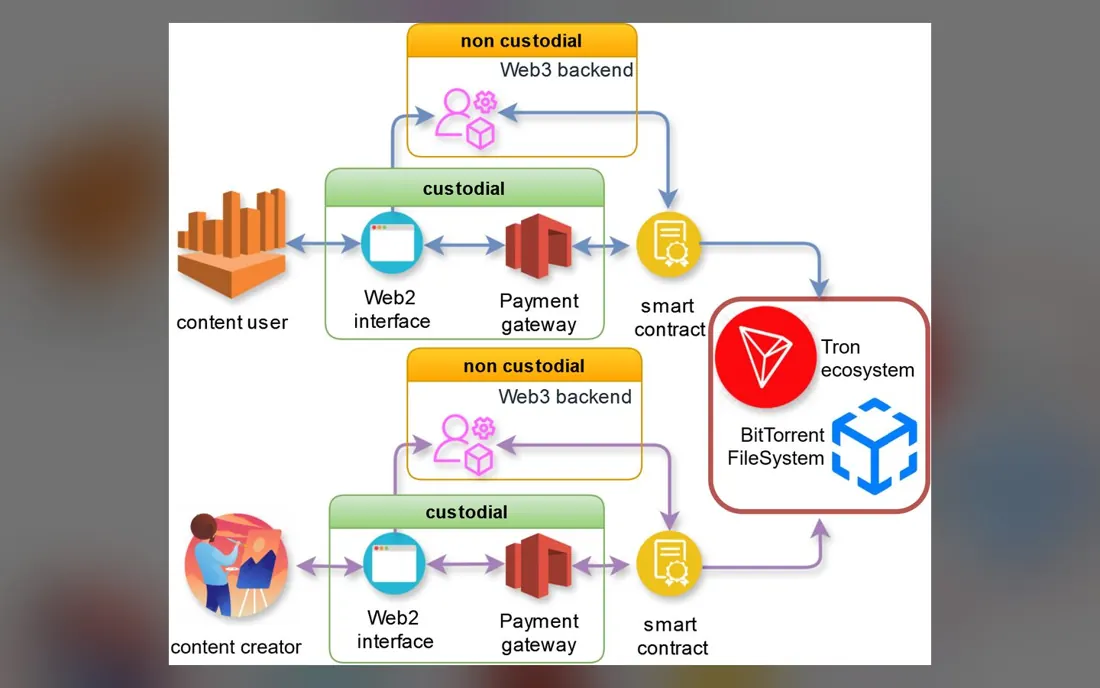
For artists new to crypto: a familiar web interface where the platform manages the wallet behind the scenes.
Gets from ArtistHands to Payment gateway
Logic
Payment gateway
A crypto payment gateway that accepts hundreds of tokens; non-custodial and easy to integrate, but itself a centralised service.
- Crypto gateway
Gets from Custodial web2 appHands to Royalty contract
Data
BTFS storage
The works themselves live on the BitTorrent File System, replicated across peer-to-peer nodes and paid per GB per month.
- BTFS
Gets from Royalty contract
Infrastructure
TRON network
Chosen over the alternative the team compared as the more mature ecosystem; about 3 s block time per the figures in the deck.
- TRON
Gets from Royalty contract
Logic
Non-custodial path
For experienced users: they connect their own wallet and talk to the contracts directly.
- Web3 wallet
Gets from ArtistHands to Royalty contract
The problem
In Italy, copyright runs through collecting societies: slow procedures, several intermediaries and little control for the artist. Generative and AI art makes it murkier, because it is unclear who protects works made with algorithms. The company that commissioned the course project asked how blockchain could help with intellectual property.
What I built
- Mapped the legal frame with the team: Italian copyright law 633/1941, Decree 35/2017, the Barnier Directive and the EU court ruling that ended the collecting-society duopoly.
- Compared a centralised and a decentralised model: an immutable registry, and smart contracts that pay royalties straight away.
- Proposed a hybrid architecture: a custodial web2 path for artists new to crypto, a non-custodial path for experienced users, a crypto payment gateway and storage on BTFS in the TRON ecosystem.
- In my area, go-to-market: emerging singers as the niche, Audius, Opulous, Catalog and Glass as references, social channels split between education and artist acquisition, launch events in person and in the metaverse, a loyalty and referral programme.
The hard part
Lowering the entry barrier without losing the point of decentralisation. Most emerging artists are not crypto-native, so the design adds a custodial web2 path next to the non-custodial one. The question a technical review would raise is who holds the keys on the custodial side, and the deck does not answer it.
Result
An interim written report for the commissioning company, then a final 14-slide deck (version 7) for the closing presentation. Concept only, with no prototype or smart contract. Overall course grade B+.
My role
One of five in a course project commissioned by a company. My operational role in the group's work plan was marketing strategy, shared with another member; teammates assembled the deck. No AI tools are documented for it.